
- Пустыня Блэк-Рок
- Смотреть что такое «Пустыня Блэк-Рок» в других словарях
- Ссылки
- Welcome to Black Rock Desert, Nevada
- Black Rock Desert History
- Black Rock – High Rock Emigrant Trails National Conservation Area
- Black Rock Desert Playa
- Soldier Meadows
- Fly Canyon and High Rock Lake
- Hardin City
- Stevens Camp
- The Evolution of Burning Man
- Special Opportunities for Burners & Room Packages
- Черная пустыня на карте
- Visiting the Gerlach-Area Hot Springs
- Know Before You Go
- Hours
- Route Overview
Пустыня Блэк-Рок
Пустыня Блэк-РокПустыня Блэк-Рок (англ. Black Rock Desert) — солончак и бессточное озеро на северо-западе штата Невада, США. Площадь пустыни составляет 2,6 тыс. км² при длине 110 км и ширине 32 км. Часть бессточного Большого Бассейна.↑History. Walker Lake Interpretive Association. Проверено 23 апреля 2009.↑Lahontan State Recreation Area. Nevada Division of State Parks. Проверено 23 апреля 2009.↑ Black Rock Desert (region, Nevada, United States) — Britannica Online Encyclopedia
.
.
Смотреть что такое «Пустыня Блэк-Рок» в других словарях


Пустыня Блэк-Рок (англ. Black Rock Desert) — солончак и бессточное озеро на северо-западе штата Невада, США. Площадь пустыни составляет 2,6 тыс. км² при длине 110 км и ширине 32 км. Часть бессточного Большого Бассейна.
Не следует путать с Блэк-Рок — пустыней в штате Невада.
Блэк-Рок-Дезерт (англ. Black Rock Desert volcanic field) — вулкан в штате Юта на западе США. Является вулканическим полем, высшая точка которого составляет 1800 метров. Состоит из туфовых конусов, кратеров. Основной вулканический материал — базальты. Наиболее молодое вулканическое образование — конус Блэк-Рок (англ. Black Rock Volcano), высотой 1480 метров. Блэк-Рок-Дезерт в свою очередь состоит из 5 вулканических полей:
- Вулканическое поле Павант (англ. Pavant volcanic field) — название связано с вулканическим конусом Павант-Бьютт (англ. ), достигающего высоты 1753 метров. Расположено в 25 километрах от городка Холден. Сложено базальтами, много застывших потоков лавы. Окончательно сформировалось 16 000 лет назад, в результате взрывного извержения из озера Бонневилль на глубине 85 метров.
- Вулканическое поле Канош (англ. Kanosh Volcanic Field) — состоит из возвышенностей, которые состоят из вулканического пепла, золы, застывших лавовых потоков, состоящих из базальта.
- Вулканическое поле Тэбернакл (англ. Tabernacle volcanic field) — расположено в 8 километрах от городка Медоу. Занимает площадь 12 км². Состоит из базальтов. В центральной части вулканического поля возвышается туфовый конус, высотой 1512 метров.
- Вулканическое поле Айс-Спринг (англ. Ice Spring field) — находится в 15 километрах от городка Филмор, площадью 20 км². Наибольшая высота 1550 метров. Состоит из кратеров, наиболее крупные: Кресент, диаметром 500 метров; Митра, диаметром 300 метров; Терраса, диаметром 300 метров. Последняя вулканическая активность в данном районе происходила чуть меньше 1,5 тысячи лет. Сложено ксенолитами, гранитными породами.
- Вулканическое поле Коув-Форт (англ. Cove Fort volcanic field) — название связано с городком Коув-Форт, который находится на северо-западе от него. Состоит из вулканического шлака, крупного кратера, достигающего километрового диаметра. Потоки застывших лав достигают расстояния 20 км к юго-западу от городка Коув-Форт.
Вулканическое поле покрыто пустынным рельефом. Сформировалось в эпоху плейстоцена-голоцена. Помимо базальтов, почвы сложены риолитами.
Ссылки
- Вулкан Блэк-Рок-Дезерт на сайте Global Volcanism Program Смитсоновского института
- Volcano Live — John Search
- Utah Geological Survey
Welcome to Black Rock Desert, Nevada
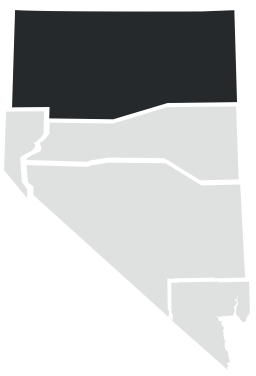
Looking for off-grid solitude amid pristinely stunning landscapes? There’s no shortage of either in the massive Black Rock Desert in the ruggedly remote northwestern Nevada. This vast landscape is managed by the Nevada Bureau of Land Management (BLM) and is comprised of 1.2 million acres of national conservation area and national wilderness area, making it the largest collection of publicly managed land in the continental United States. Aside from the fact that the area has some of the most rugged canyons, pristine hot springs, and expansive dry lake beds (or “Playa”) features in all of the Silver State, this area is also federally protected to preserve 180 miles of historic emigrant trails used by early pioneers making their way West.
From remote off-roading past historic sites and natural hot springs to rockhounding, camping under some of the most star-studded skies in the country, and beyond, expect the unexpected in this wild, far-flung corner of the Silver State.
Black Rock Desert History
American Indians were the first to call Nevada’s Great Basin Home, living in and around the Black Rock Desert nearly 10,000 years ago. Today, the Summit Lake Indian Reservation lies directly to the north of the Black Rock Range Wilderness area, and the Pyramid Lake Indian Reservation can be found directly to the south of the NCA.
An offshoot of the California Trail, the Lassen-Applegate Trail was used by early pioneers making their way to northern California and southern Oregon during the early 1850s. Thousands of 49ers traversed this northwestern section of Nevada, braving some of the most dangerous and remote sections of the entire trail. If you keep an eye out, you’ll find many wagon ruts in the area—some even visible on the Playa itself. Historical markers are found throughout the Black Rock – High Rock Emigrant Trails National Conservation Area, featuring quotes from pioneer journals—a window into what it was like for those enduring a true land of extremes.
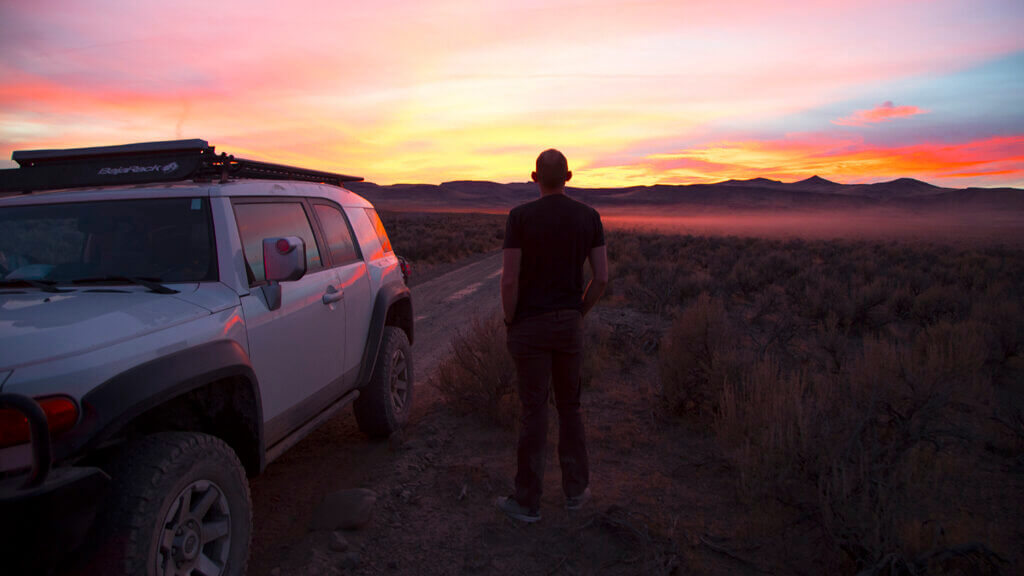
Black Rock – High Rock Emigrant Trails National Conservation Area
A stunning 752,000 acres of the Black Rock – High Rock Emigrant Trails National Conservation Area is comprised of 10 wilderness areas, each brimming with enough only-in-Nevada characteristics to speak to the adventurer in all of us. Black Rock BLM wilderness areas include the Black Rock Desert, Calico Mountains, East Fork High Rock Canyon, High Rock Canyon, High Rock Lake, Little High Rock Canyon, North Black Rock Range, North Jackson Range, Pahute Peak, and South Jackson Mountains.From remote off-roading and historical interests, to natural hot springs, rock climbing, primitive camping, unfenced wildlife, and beyond, expect the unexpected in this ruggedly remote corner of the Silver State.
Black Rock Desert Playa
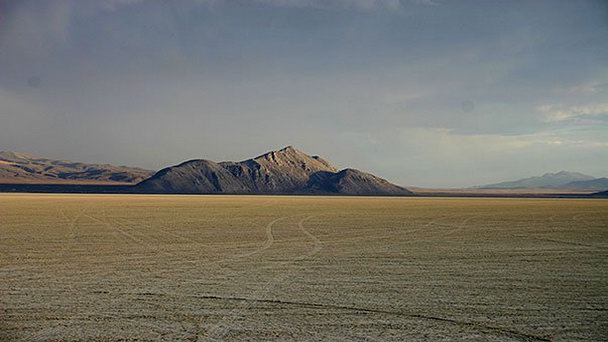
Spanning approximately 200 square miles, the legendary Black Rock Playa is a remnant of the ancient Lake Lahontan. Although it is home to the infamous Burning Man Festival and the experimental pop-up 70,000-person metropolis that is Black Rock City once a year, the playa surface is much more than where the world’s largest party takes place. In fact, the land speed record was once set on this vast and desolate dry lakebed. A hard-to-imagine 763 miles per hour was set in a 20,000-pound vehicle on the Black Rock Desert by a British team in 1997. Better yet, this was the first time a land-based vehicle broke the sound barrier. Few places on this planet are flat enough over a long enough distance to safely allow a vehicle to reach such tremendous speeds, and the Black Rock Desert happens to be one of the best.
Soldier Meadows
An unsuspecting oasis in an otherwise arid landscape, Soldier Meadows was a tried-and-true stopover for early pioneers making their way through the region. Fed by both warm and cool springs, these natural pools are home to a species of fish and snail that aren’t found anywhere else on earth. A hot creek is located in the meadow with several dammed-up areas that make for the perfect soak. Primitive campsites are peppered throughout the area, and a first-come, first-served BLM cabin is on-site and open to the public as well. If complete off-grid solace is what you’re after, Soldier Meadows, just be warned that the BLM considers this a “high traffic” area of the NCA—but what that really means is you might see maybe a half dozen cars throughout the course of the entire “busy” day. (And of course, also very well might not.)
Fly Canyon and High Rock Lake
Perhaps one of the most spectacular areas within the National Conservation Area is Fly Canyon and High Rock Lake. Unique geological features exist here that were created close to 12,000 years ago after a large rockslide closed the original canyon. The new outlet, Fly Canyon, cut a narrow canyon that empties at Soldier Meadows. One particularly special geologic feature is the potholes, which were carved by whirlpool action of sand and gravel in the stream when massive flood waters washed through the canyon.
Hardin City
As you get deeper into this extremely remote section of Nevada, you’ll come across Hardin City, a mining camp established in 1866 when prospectors thought they had found James Hardin’s lost deposit of silver. As a result of all the hype, quite a few prospectors flocked to the area to build stamp mills. But, when no actual silver materialized, the town quickly vanished after eager miners moved on to more lucrative communities. Today, a few stone foundations and other small relics can be found in the area.
Stevens Camp
When exploring Nevada’s beautiful backcountry, always remember to live by the Dirt Road Code and travel prepared to survive. Remember to bring a spare (a tire patch kit wouldn’t hurt either), extra fuel, and plenty of food and water. This is a tremendously beautiful section of Nevada, but is said to be one of the most rugged and remote corners of the USA. It proves to be a great way to disconnect from it all, but remember, you will in fact be disconnected from cell service and away from modern conveniences like restaurants and gas stations. Do not attempt to travel in this area unless you’ve come equipped with a high clearance, 4-wheel drive vehicle (especially Fly and High Rock Canyon). Travel smart and plan ahead.
Travel Nevada Pro Tip
Careful! While driving on the Black Rock Desert playa is something every Nevada explorer should check off their list, is positively unsafe to access during or long after any kind of wet weather. It may look safe, but this quicksand-like mess will trap you up to your axels faster than it finished off woolly mammoths back in the day. If the playa looks any kind of wet (or darker brown), don’t try it. Save this mission for a warmer, drier month!
8:00am — 11:59pm daily
Photo Credit: Dust To Ashes
Each year, an unimaginable 70,000 people from all over the globe flock to the otherworldly landscapes of the Black Rock Desert to create Black Rock City, the largest temporary metropolis in the world. The biggest party on Planet Earth is devoted to community art, self-reliance, and self-expression forms an against-all-odds city in the desert, a culture of possibility, a network of dreamers and doers. Event goers gather to burn the man, a symbol whose meaning is as varied as the attendees themselves.
“If you gave yourself permission to be more creative and connected, what would your story be?”
Leave no trace is of the utmost importance for Burning Man, leaving the Black Rock Desert alkali surface (or Playa) as it was before 70,000 people partied on it for 10 days straight. In Black Rock City, you won’t be the weirdest kid in the classroom and you’ll become a part of the growing community of Burners who are active year-round.
This arts and cultural celebration embraces ten key principles, which are expected to be upheld by attendees. The ten principles of Burning Man are:
- Radical Inclusion
- Gifting
- Decommodification
- Radical Self-Reliance
- Radical Self-Expression
- Communal Effort
- Civic Responsibility
- Leave No Trace
- Immediacy
- Participation
Of the ten principles, participation is considered to be one of the most important. Selfless giving of one’s unique talents for the enjoyment of all is encouraged and almost enforced. This can be demonstrated in creating art forms, like sculptures or art cars, or performance.
The Evolution of Burning Man
One of the founders, Michael Mikel, realized that a group of California-based friends were at great risk wandering around the vastness of such a vast, dry landscape that he took the name Danger Ranger, thus creating Black Rock Rangers. Thus, Black Rock City began and has stuck since. In its first few years in Nevada, the event substantially grew by word of mouth alone. By 1996, Burning Man began adapting an annual theme and building more elaborate man structures. Ticket prices during this time were around $65. What began as 20 friends in 1986 has now grown to 70,000 people and beyond.
Special Opportunities for Burners & Room Packages
A series of decompression events go down after the burn in Reno, and several of the hotel properties throughout the area offers special rates and packages to burners making their journey home. Besides, there is so much to check out around the Reno-Tahoe area that you may want to treat yourself and take an extra day to recharge before facing the real world again.
August 27 — September 4, 20238:00am — 11:59pm daily
Смотреть пустыни в Неваде
Пустыня Блэк Рок это дно огромного озера Лаонтан, которое исчезло примерно семь тысяч лет назад. Это скалистое темное плато, покрытое солеными отложениями с множеством геотермальных источников и гейзеров. Если вам интересно оказаться в необычном месте с инопланетными пейзажами, то черная пустыня Блэк Рок как никакое другое место подходит для такого путешествия.
На всей территории пустыни вулканические и геотермальные образования встречаются довольно часто, придавая пейзажу совсем уж необычные формы. Самым популярным и узнаваемым является гейзер Муха, который образовался в результате деятельности человека. Маленькая случайность при бурении почвы выпустила на свободу горячие струи, которые буквально за несколько десятилетий образовали вулкан высотой в рост человека. Необычные бактерии и зеленоватые водоросли окрасили стенки гейзера в переливающиеся цвета радуги. На фоне довольно сурового и темного пейзажа гейзер Муха смотрится крайне необычно.
В черной пустыне есть район богатый залежами гипса, окрашивающий окружающий пейзаж в пронзительно белый цвет. Граница между черным песком и белыми скалами проходит так резко, что кажется будто ты зашел в другую комнату.
Местонахождение: Quinn River, Невада
Черная пустыня на карте

Заповедник Меса-Верде, Невада, США

Каньон Эльдорадо, Невада, США

Ред Рок Каньон в Неваде, Невада, США

Дамба Гувера, Невада, США

Долина Огня, Невада, США
Черная пустыня, Невада, США
It’s no surprise that the Black Rock Desert—an area known for stunning landscapes, and untamed remoteness—is home to an impressive series of some of Nevada’s best public natural hot springs, including the Black Rock Hot Springs. Ruggedly remote and with incredible views, the Black Rock Desert hot springs north of Gerlach, Nevada, offers exactly what one dreams of in a high desert oasis.
Soak in the watering hole where emigrants once crossed the vast playa of the Black Rock Desert.
The geothermal hot springs can be found along the edge of the Black Rock Desert’s Playa (or dry lakebed surface), made famous by the Burning Man, held here each year. Accessing the pool is no easy feat, however, and requires the skills of an experienced offroad driver. With this in mind, plan ahead and know your limits before heading into the stunning northwestern solitude.
Visiting the Gerlach-Area Hot Springs
Accessing Black Rock Hot Springs, Nevada means traveling across the Playa—an ancient dry lake bed within the Black Rock Desert–High Rock Canyon Emigrant Trails National Conservation Area. This public land is commonly dry—cracked after baking in extreme high desert temperatures—but is completely impassible when wet. If conditions are dry and the Playa is safe to access, do as the pioneers did and look for the pointed black rock formation on the horizon. The hot springs are accessed directly beneath this age-old landmark, and can be accessed via a sandy dirt road. Here, visitors will find a large blue pool of natural hot spring water, surrounded by reeds and wetlands.
Know Before You Go
Before you hit the road, be sure to read up on the Dirt Road Code and Nevada Hot Springs Etiquette. Always travel prepared, and bring along more food and water than you think you’ll need, a spare tire (or two!), and be sure to let someone know where you’re headed and when you plan to return. This is a spectacular section of Nevada and one of the state’s most rugged and remote. It proves to be a great way to hit reset, but remember this: you will be in fact be disconnected from cell service and away from all modern conveniences like restaurants and gas stations. Do not attempt to travel in this area unless you’ve come equipped with a high clearance, 4-wheel drive vehicle.
If it’s anything other than bone dry, DON’T DRIVE ON THE PLAYA. Check recent conditions with Friends of Black Rock or a Gerlach business before attempting to drive on the Playa or access any of the natural hot springs that surround. To plan ahead, call the Friends of Black Rock directly at (775) 557-2900.
Hours
Black Rock Hot Springs is managed on behalf of the Nevada Bureau of Land Management (BLM), making free public access available to all.
January 12, 2023 / 11:11 AM
/ AP
PIX Now — Thursday morning headlines from KPIX newsroom
RENO — Add Burning Man to the list of plaintiffs challenging one of the growing number of «green energy» projects in the works in Nevada.
Lithium mines aimed at boosting production of electric vehicle batteries and geothermal power plants that tap underground water to produce renewable energy are at various stages of planning and development in the nation’s top gold mining state.
They say that while they support reductions in greenhouse gas emissions to help combat climate change, the commercial developments on public land in Nevada were approved illegally and will have their own environmental and cultural consequences.
Now, the group that stages perhaps the most famous counterculture event in the world is among those facing off against the U.S. government over geothermal exploration in the Nevada desert where 70,000 free spirits known as «Burners» gather every summer.
The San Francisco-based Burning Man Project and four co-plaintiffs filed the new lawsuit in federal court in Reno this week accusing the Bureau of Land Management of breaking environmental laws in approving Ormat Nevada Inc.’s exploratory drilling in the Black Rock Desert 120 miles (193 kilometers) north of Reno.
Friends of Nevada Wilderness, Friends of Black Rock/High Rock Inc. and two local residents of Gerlach joined the suit that says the agency’s environmental review of the exploration project ignored potential harms that could come from a large-scale geothermal project.
«Ormat’s exploration project will lay the foundation for turning a unique, virtually pristine ecosystem of environmental, historical and cultural significance into an industrial zone, and permanently alter the landscape,» the lawsuit says.
Ormat Vice President Paul Thomsen said the lawsuit has no merit.
The Bureau of Land Management has no comment on the lawsuit, agency spokesman Brian Hires said in an email to The Associated Press.
The drilling is planned within the Black Rock National Conservation Area, home to the festival where themed tent villages and avant-garde art exhibits sprout from a barren desert basin that was once the floor of an ancient lake.
Clothing is optional, but participation is required at the psychedelic celebration of art, music and sometimes anarchy itself as aging hippies, Silicon Valley executives and other curiosity seekers gather around drum circles and pagan fire rituals.
Or, as the lawsuit says, where attendees «over the course of eight days, camp and participate in a unique experimental community.»
«The ethos and culture of the event are rooted in the Ten Principles of Burning Man,» including «radical inclusion,» gifting, self-expression, communal effort, civic responsibility and «Leaving No Trace,» the lawsuit explains.
The lawsuit said Ormat has attempted to evade analysis of the geothermal power plants’ potential negative effects on the environment by segmenting the project, which limits BLM’s review to only the first stage of its plans: exploration.
«However, this first stage merely confirms where the resources are located to inform future industrial scale geothermal energy development,» the suit said. «Once the exploration project begins, it will be impossible to stop the effects of the entire geothermal production project.»
The exploration project calls for 19 test wells and pads, associated facilities and 2.8 miles (4.5 kilometers) of improved and new access roads.
The proposed wells would be adjacent to a number of unique hot springs that are relied upon by the local community for tourism. The springs also are ecologically significant because they’re «interconnected with each other, the ecosystem and the pristine landscape of the region,» the suit said.
«After participating in the public process and seeing no movement on our concerns, we filed this lawsuit to help ensure the impacts from the proposed project are minimized, and that Ormat is a good corporate citizen in this environmentally sensitive, economically vulnerable area of northern Nevada,» said Adam Belsky, Burning Man Project’s general counsel.
Thomsen said in an email that Ormat «looks forward to prevailing in the lawsuit and continuing its contribution to Nevada’s green energy, zero emissions future, which will offset some of the copious amounts of fossil fuels the Burning Man Project annually emits in the Black Rock Desert.»
Central monument of Black Rock City: The Man
Burning Man is an annual event that started in San Francisco in 1986 and moved to the harsh and unforgiving Black Rock Desert of Nevada in 1990, where it continues today. The event happens each year in late August and early September, during the week before Labor Day weekend and over the weekend itself. Around 70,000 artists, partiers and eccentrics converge on the desert location – otherwise empty throughout the year – to create a temporary city on the desert lake bed («The Playa»). The event culminates on Saturday night when the event’s eponymous mascot – an 80-foot-tall anthropomorphic statue known affectionately as The Man – is set on fire in a huge bacchanalian party.
The Burning Man community, although widespread and anarchic, has some guiding principles (codified and exemplified in catch phrases) that make the event manageable and possible. First and foremost is the concept of «self-sufficiency». With few exceptions (see Buy below), there is «No Vending» of any kind in Black Rock City. Attendees are expected to bring along all their own food, water, shelter and any other supplies they need to live in the desert during the week. Most attendees are helpful and generous, but travellers should do as much research as possible before leaving for the desert in order to be ready.
An extension of this principle is the Leave No Trace policy; all attendees are expected to clean up any and all trash they create, including burned material, cigarette butts, sawdust or peanut shells. In previous years leftover detritus at the site of the event has caused alarm for the federal officials who provide the permits for it, and a strict policy of absolutely zero tolerance for leftover trash is needed to keep the event alive.
Burning Man is organized by a small group of volunteers and paid employees of the Burning Man organization, who deal with the local, state and federal officials in charge of the desert region, and who provide most of the infrastructure services such as emergency medical care and media relations. According to the principle of No Spectators, however, all Burning Man attendees are expected to participate in some way: by making art, by doing performances, by doing volunteer work, or just by being freaks. The idea is that spectators feel no ownership – or the consequent responsibility – for the event, while participants will consider the event their own, and will act as responsibly as if they were throwing the party themselves. In fact, they are! There’s some «us vs. them» feeling between participants and the «Org», but by and large the No Spectators concept ensures smooth operation and wide participation. A «burner» is common title or descriptor for a participant of this event and this community.
Lastly, the community encourages radical self-expression. There’s an «anything goes» atmosphere, pretty much only limited by legal and safety concerns as well as respect for other participants. Nudity is widespread – although many participants will decorate their bodies with paint or ornaments. As a component of the «anything goes» atmosphere of personal freedom and personal choice, drug use is common, though generally discreet. Furthermore, out of respect for other participants and their individual choices, it would be very unusual for anyone attending the event to ever feel any pressure towards drug use whatsoever. Alcohol, however, is plentiful, and free bars exist throughout the city. Fundamental elements of the event are individual choice and personal freedom. Numerous art projects on the Playa have an element of danger; and the use of fire in art is quite common, as well as explosives or other dangerous substances. Many participants speak later of the life-changing nature of the Burning Man experience: that the experience of self-expression changes the way they look at the world.
The street names change each year, based on the theme of that year’s event. Combined with the fact that the city is torn down and rebuilt each year, so that different services and theme camps are located at wildly different places in the city, this makes for a lot of disorientation and difficulty in finding friends and cohorts. Participants argue that this can make travelling around the City more adventurous; it definitely leads to serendipitous discoveries. The night of the annual burning of the Man, participants take away all existing street signs as souvenirs — much like matchbooks — making navigation even more confusing.
Some things are constant, though, in an unofficial way. The radial streets are usually labeled according to clock time (e.g., «10:00» or «4:30»), and spaced about every half-hour. A large circular village known as Center Camp is (almost always) located at 6:00 on the circle; most of the Burning Man organizations services are located here. Other villages are usually placed near 9:00 and 3:00. The innermost circular street – which looks out directly to the central desert area – is called The Esplanade; most of the bigger theme camps line this street. And, of course, The Man is always dead in the center of the City, a convenient landmark.
Once participants have arrived in Black Rock City, they are expected to leave their cars or other motor vehicles parked and travel around the city under their own power. Cars should only be used in an emergency, or when leaving or entering the city. Law enforcement officials and the Black Rock Rangers will stop vehicles which may result in your vehicle being parked.
Bicycles are de rigueur for most BRC citizens; the alkali dust of the Playa causes severe damage to bikes, so bring a cheap one that you don’t care much about. A good lock is also important; many bikes every year are «accidentally» borrowed and later abandoned, or stolen outright.
Walking is also a great way to get around; although slower, it’s easier to stop and see the many sights if you don’t have a big clunky bike to park, lock, unload, etc.
Many art cars have high passenger capacity and will pick up participants on the Playa for a ride, but don’t expect or demand a ride from anyone. Use caution when boarding or disembarking from any moving vehicle on-playa. While all vehicles within the event’s perimeter are required to drive slowly, this does not mean the vehicle is safe to leap from.
The art installations and theme camps present at Burning Man change, sometimes radically, each year. Those listed below may or may not be present, or may be significantly altered. You can check the Who, When, Where guide – available at the Gate of Black Rock City or at the «Playa Info» tent in Center Camp – for locations of theme camps and other installations. (Note, though, that theme camps’ descriptions are self-reported, and usually greatly exaggerate the interest-factor of the camp.)
Other art can be seen in the central Playa area surrounding the Man. Typically there are 40-50 art installations of various complexity and interactivity on the central Playa. Usually, a wandering path on bicycle or on foot can turn up any number of hidden treasures; ask other participants for this year’s «must see» piece.
- Yoga Several camps offer yoga sessions, both «serious» and silly.
- Morning run
- Body Painting
- Fire Dancing
- Belly Dancing
- Seminars on anything from world affairs to love potions
- Arts and Crafts
- Weddings Legal, temporary, faux, and every other possible combination. Get married to your true love by a legal minister or marry yourself to a sock.
- Massage — ranging from legitimate bodywork to Reiki to Rake-ie to «You look tense, let me rub your shoulders in my tent»
- Thunderdome Watch some of the greatest warriors of our time battle for their lives
- Roller Disco Enjoy some funk-a-fide jams as you skate the rink (skates provided for all burners)
Burning man has a no-vending rule, which means there’s really not all that much to buy in Black Rock City. Citizens of Black Rock City are expected to adhere to a spirit of self-reliance and come to the event having prepared with shelter as well as enough food and water for the entire duration of their stay. Despite the spirit of self-reliance, most participants bring extra resources to provide to fellow burners, which includes gifting. Participants (including artists, engineers, performers, etc.) bring their skills and talents to put together camps and art pieces as gifts to the event. Although some people bring trinkets — such as pins, stickers, buttons, clothes, jewelry, doodads and tchochkees to gift to other people there — it’s genrally discouraged to gift things that do not have personal meaning and that will ultimately end up in the land fill. Gifting works best when it is thoughtful and does not have to be a physical thing.
There are four places you can spend money. One is at the Center Camp Cafe (see below) for coffee and other snacks. The others three are ice dispensaries like Camp Arctica (in Center Camp and at the 9 o’clock and 3 o’clock plazas), where Burning Man volunteers sell bags of ice at $3 a pop for participants to use. (The short lifespan of ice in the desert, even in the best of coolers, makes this an unfortunate necessity.) .
Outside of these four locations, there is no officially sanctioned commercial activity due to the principle of decommodification. This means that participants should not place monetary value on what they give or exchange on the playa, as this inherently commodifies them. As a result, all sales (for profit, at cost, and at a loss) and barter is frowned upon. Although some people inevitably break these rules by trying to sell or trade items (including illegal substances), they are often taken to be tourists (those who didn’t bother to prepare or adhere to the rules of the event) or law enforcement officers trying to trick participants into illicit acts. To avoid this, participants purchase all necessary and luxury items prior to entering the event, and make do without the things they didn’t bother bring. Participants will often be pleasantly surprised by the gifts they receive on the playa, but should not expect specific items to be provided to them by other burners upon request.
Despite this ban on commercial activities, visitors will find numerous cafes, bars, shops, workshops, lessons, musical performances, and art exhibits which are free. Night life in the city is particularly lively. Volunteering and supporting these «places of business» is a great opportunity to gift back to Black Rock City. Be advised that opening hours may be limited (often found in the WWW guide given at entry to the event).
In keeping with the non-commercial, self-sufficient nature of Burning Man, there are (with one exception) no food stores or restaurants within the borders of Black Rock City. Participants are expected to bring in all the food they need for the week, as well as any cooking equipment needed to prepare it.
That said, many theme camps give away food on a daily basis or have special events with free food. Scan the theme camp listings and the Who What Where event guide for details. Talking to neighbors can also garner invitations to more informal meals.
Again, non-commercialism means there are no paid bars in Black Rock City. However, a large number of bars exist at Burning Man. Participants can walk up and order or be given a drink at any of these bars scattered around the city, but most will have supplies limited to a house specialty drink or a few hard liquor choices and mixers. Barter bars depend on donations from «customers» to keep going; providing ice, cups, mixer, liquor, limes or entertainment will make you a much more welcome guest.
There are no paid accommodations in Black Rock City. Participants should bring their own camping accoutrements such as a tent and sleeping bag; it’s also a good idea to have some sort of shade structure to make napping during the heat of the day bearable.
Many theme camps feature a «chill space» or other area for lounging. In a pinch, these can make for good naptime stopovers during the day or night, but don’t overstay your welcome or you might have some problems with the locals.
Black Rock City is not without danger. The odds are unlikely that you will suffer a major catastrophe, but every year something bad does happen to a handful of people. Black Rock City is far more regulated than it once was (much to the dismay of many jaded old burners) but it is still on the fringes of being a lawless society.
To minimize the impact of the event on nearby communities (not least to minimize levels of airborne dust), participants are expected not to leave and re-enter Black Rock City except in case of emergency. To leave the event and re-enter in a car, a $20-per-person fee is charged each time.
Buses do leave Center Camp once or twice a day for trips to the nearby towns of Gerlach and Empire; they require a $10-per-person payment. Empire has a small store for buying groceries or camping supplies, but it has a meager selection.
The exodus from the event on Sunday and Monday are notoriously traffic-ridden and crowded, as practically all participants try to leave on the same one-lane road off the desert at the same time. Waits of up to 6 hours to travel the 10 miles or so to the blacktop are not unheard of. Veterans often leave on Saturday – before the Burn – or wait until Tuesday when the event is officially concluded.
This is a guide article. It has a variety of good, quality information including hotels, restaurants, attractions, arrival and departure info. Plunge forward and help us make it a star!
The Black Rock Desert may be one of the lesser traveled desert regions in the United States, but adventurers who make the trip will be rewarded with expansive horizons, abandoned mines and ghost towns, hot springs, and DIY art exhibits. Tired of battling the crowds in Death Valley and the Mojave, then consider heading north to the Black Rock High Rock National Conservation Area for your next off road adventure!
Route Overview
231 miles, 3-6 days
October — Late May but Fall and late Spring are the best times to go. High Rock Canyon is typically closed from Feb to mid-May. Higher elevation trails may be impassable due to snow and/or mud during the winter months. Always check with BLM for conditions on the playa, as it may be difficult or impossible to traverse when moisture or mud is present.
A combination of dry lake bed, gravel roads, bumpy/rocky jeep tracks (upper High Rock Canyon), and some steep, and loose trails on the way to Black Rock Point Vista.
: 4×4 with A/T tires.
You may explore the souther section around Black Rock City and the Playa. Sprinter 4x4s are not recommended in High Rock Canyon or the trail to Black Rock Point Vista.
n/a BLM enforces a maximum speed limit of 45 mph when traveling across the playa.